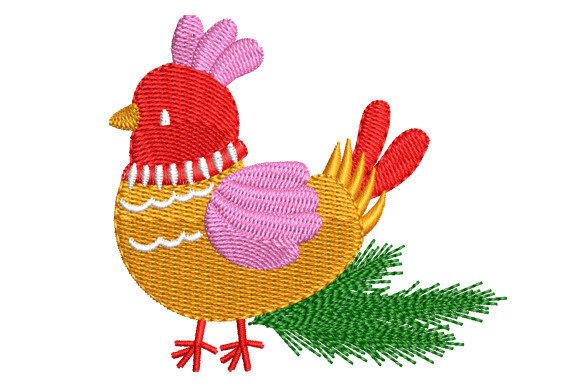
Review: Christmas Chicken for Craft Fair Success
As an embroidery designer who has spent countless weekends standing behind booths at local markets, I have learned that the difference between a browser and a buyer often comes down to personality. When I first loaded the Christmas Chicken machine embroidery design into my software, I was looking for more than just holiday cheer. I was looking for a conversation starter. In a sea of traditional snowflakes and generic Santa motifs, this design offers a whimsical twist that immediately catches the eye. It is not just cute; it is memorable. For craft fair sellers and handmade shop owners, memorability is currency.
First Impressions and Market Appeal
The initial vibe of Christmas Chicken is undeniably festive but with a modern, humorous edge. It feels less like a stiff, formal holiday decoration and more like a warm, inviting hug from a friend who loves quirky humor. This specific aesthetic appeals strongly to the current trend of "farmhouse chic" mixed with playful minimalism. When evaluating a new digital embroidery file, I always ask myself: does this look expensive? Does it look handmade in a good way?
This design strikes a balance between decorative and fun. It avoids the clutter that often plagues complex holiday motifs, making it versatile enough for various products. For an Etsy seller or a boutique maker, this versatility is crucial. You are not limited to one niche. The design works equally well for a young family looking for something funny for their kids and an adult buyer seeking a unique gift for a chicken-loving friend. That broad demographic appeal is exactly what you want when planning your inventory for a busy holiday market.
Product Versatility and Placement Strategy
One of the strongest assets of the Christmas Chicken embroidery file is its adaptability across different substrates. During my review, I visualized how this would look on several key craft fair products.
- Tote Bag Design: Placing this on a natural canvas tote creates an instant bestseller. Shoppers love functional art. The contrast of the colorful thread against neutral fabric makes the design pop, turning a simple bag into a statement piece.
- Apron Embroidery: Kitchen items are huge during the holidays. An apron featuring this design becomes a perfect hostess gift. It suggests warmth, cooking, and holiday gatherings without being overly religious or traditional.
- Tea Towel Embroidery: This is where caution is needed regarding fabric texture. On a smooth flour sack towel, the details will shine. However, on thick, textured waffle weave towels, you must ensure the stitch density is appropriate so the design does not get lost in the weave.
- Embroidered Patch: If you offer patches, this design is ideal. It allows customers to customize their own jackets or bags. Patches are low-cost, high-margin small shop products that encourage impulse buys at the checkout counter.
- Caps and Hats: Curved surfaces are tricky. Before committing to a full production run of caps, test the design on a curved hoop. Ensure the design is not too wide, which can cause distortion on the front panel of a baseball cap.
Production Practicality for Batch Selling
For those of us running commercial embroidery operations, time is money. A design might look beautiful, but if it takes four hours to stitch, it may not be viable for a high-volume craft fair product. While I do not have the exact stitch count for this specific file, the visual complexity suggests it is moderate. It appears to rely on bold shapes rather than microscopic detailing, which is a good sign for production speed.
When preparing for a market, I recommend creating a batch of similar items. For example, stitch ten tote bags in one go. The Christmas Chicken design seems repeatable and consistent. Consistency is key to maintaining brand consistency and perceived quality. If every item looks slightly different due to poor digitizing or unstable fabric, your finished product loses value. Always use the right stabilizer. For stretchy fabrics like t-shirts or thin cottons, a cut-away stabilizer might be necessary to prevent puckering, while tear-away works well for stable woven fabrics like canvas or denim.
Visual Impact and Customer Engagement
In a crowded booth, your display needs to stop traffic. The Christmas Chicken design serves as a strong visual anchor. Because it is unexpected, it invites questions. "Is that a chicken wearing a Santa hat?" is a question that starts a conversation. Once a customer is talking to you, they are much more likely to buy. This engagement factor is invaluable for handmade product sellers.
Furthermore, this design photographs beautifully for online listings. Whether you are an Etsy seller updating your shop for the season or using social media to drive traffic to your physical booth, the clear lines and festive colors of this design create eye-catching images. Consider creating a printable mockup or a digital composite to show potential buyers how the design looks on different colored fabrics before you even stitch the final sample. This helps in planning your color palette for thread colors.
Technical Considerations and Careful Use
Before you launch your production line, there are critical technical checks to perform. Every embroidery machine and fabric combination behaves differently. Here is my checklist for reviewing this design:
- Test on Scrap Fabric: Never skip this step. Stitch out the design on the exact fabric you plan to sell. Check for registration issues where colors meet.
- Check Thread Contrast: Ensure your thread colors stand out against the fabric. A red chicken on a dark red shirt will vanish. Use high-contrast combinations to maximize visibility.
- Review Spacing and Density: Look closely at any small details. If the design includes tiny lettering or fine lines, verify that they do not merge together during stitching. High stitch density in a small area can cause fabric bunching.
- Confirm Hoop Size: Check the dimensions of the design against your available hoops. Ensure it fits comfortably within your standard hoop size without requiring re-hooping, which slows down production.
- Commercial Licensing: This is vital. Before selling any finished product, confirm the license terms of the digital embroidery file. Most designers allow commercial use of finished physical goods, but restrictions may apply to sharing the file itself.
Final Verdict for Handmade Entrepreneurs
The Christmas Chicken embroidery design is a strong contender for your holiday lineup. It balances humor with festive tradition, making it appealing to a wide audience. Its simplicity allows for quick production, while its charm drives customer engagement. By paying attention to fabric choice, stabilizer selection, and thread contrast, you can turn this digital asset into a high-quality finished product that stands out in any market. Remember, the goal is not just to sell an item, but to sell a feeling of joy and uniqueness. This design delivers exactly that.